
Why EnableOrg®’s Proactive Harm Prevention
Built for forward thinking Safety & People Leaders
Psychosocial Risk Harm Prevention
Significantly reduces likelihood of psychosocial incidents, claims and investigations
Reduces physical risks and incidents as high correlation of psychosocial risks attributing to physical risks
Demonstrates a “reasonably practicable” approach to WHS obligations at the highest ‘Risk Elimination’ level
Reduced workers compensation claims
Significantly conserves resources: time, money, personnel, as less incidents to log, investigate, correct, support
Lowers legal, financial and reputational risk for the organisation
Proactive Global Psychosocial Compliance Core Software
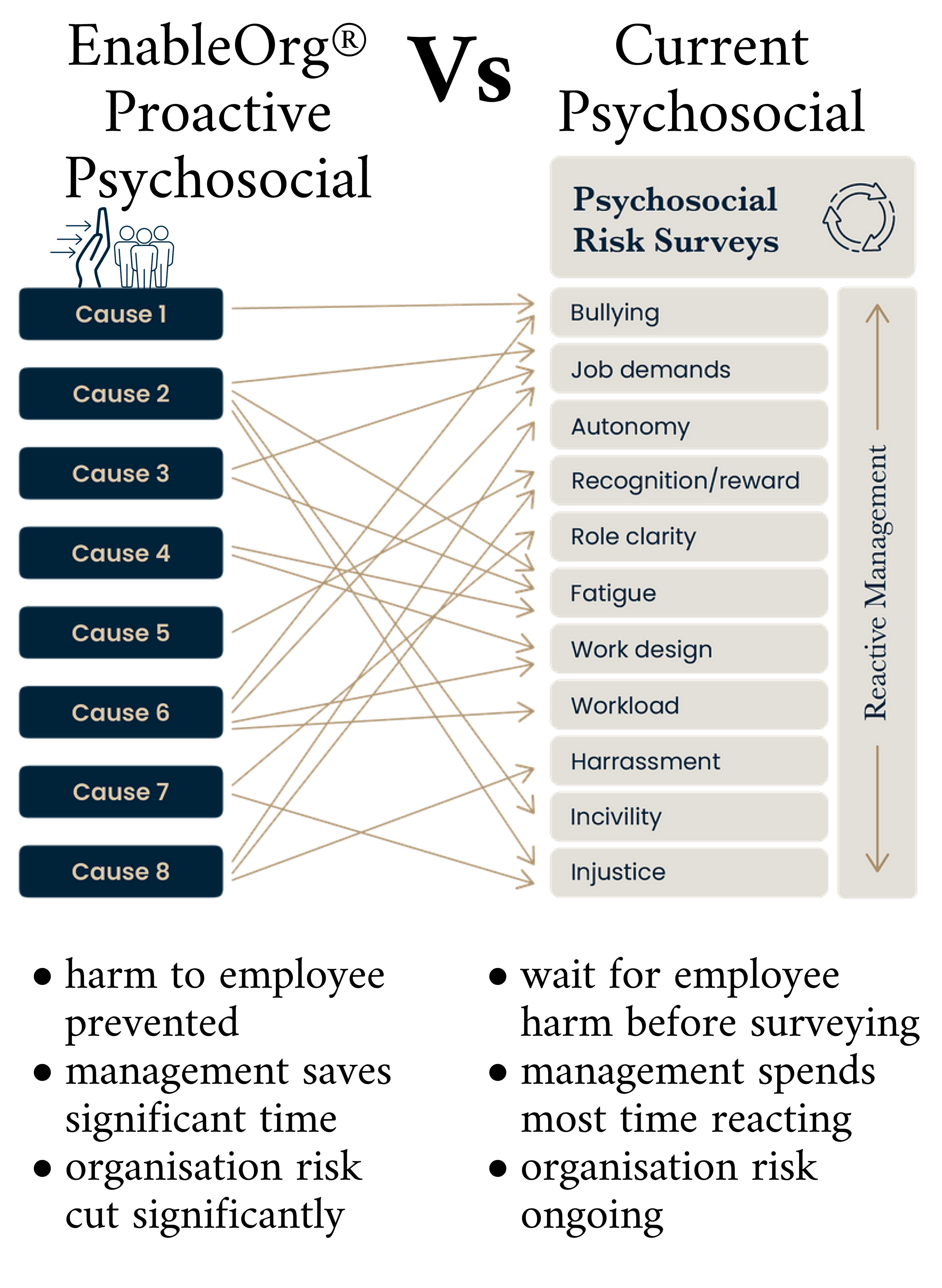
Don’t just log incidents and survey harm. Prevent it in the first place with EnableOrg®’s Elevated Harm Prevention for global psychosocial risk management and compliance.
Surveys and incident data are valuable, but they’re often retrospective. EnableOrg® allows focusing on prevention, using evidence-based methods to address psychosocial risks before they turn into harm.
From surveying to preventing
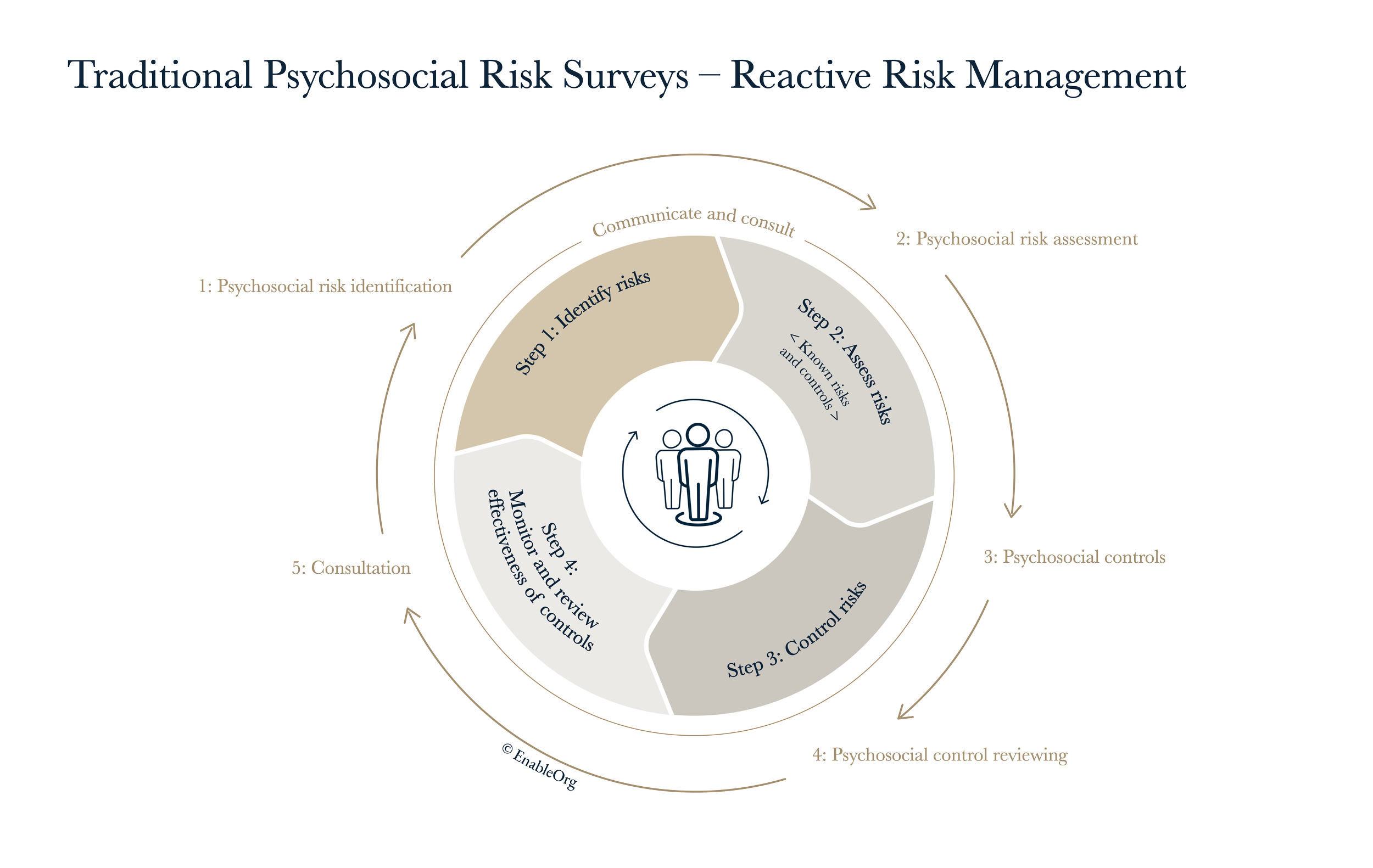
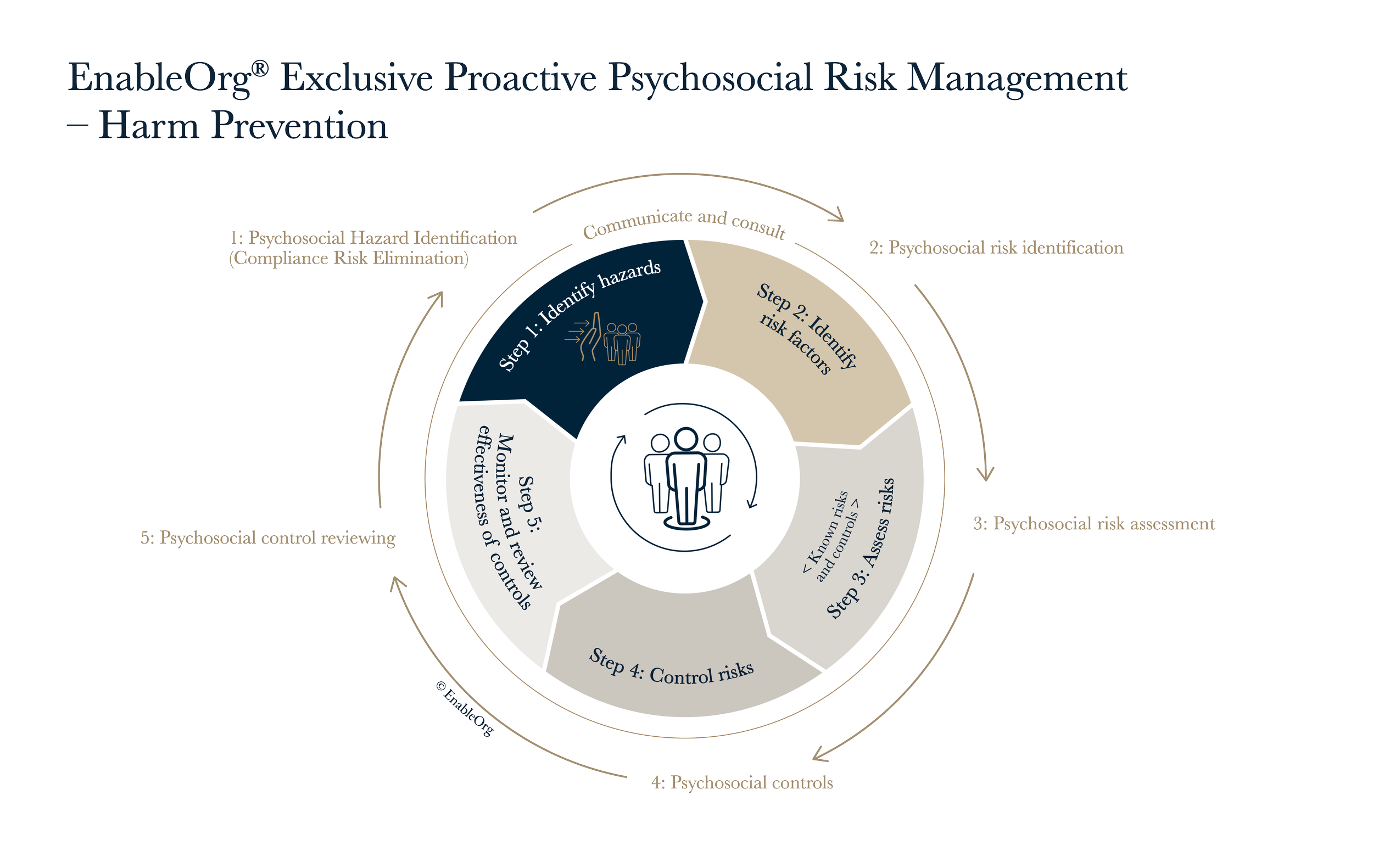
Traditional approaches prioritise measuring risks like bullying, job demands, role clarity, and rewards/recognition. EnableOrg® elevates Psychosocial Risk Compliance by targeting the factors that drive those risks, supporting earlier, more effective interventions, to reduce harm to employees and decrease organisational risks and costs.
From symptoms to root causes
Issues such as bullying, excessive workload, unclear roles, and low recognition are often symptoms of deeper organisational causes. Our direct causation controls focus on those underlying psychosocial drivers and specific hazards, helping create a safer, more sustainable and thriving workplace.From reactive to proactive
Alongside survey insights and incident reports, EnableOrg® uses quantifiable leading indicators of harm together with outcome measures. This enables proactive, data-informed harm prevention—rather than relying only on retrospective perceptions of how things are going.
Choose prevention with data driven transparency. Choose a solution that puts psychosocial compliance, thriving people and healthy culture at the centre—EnableOrg®.
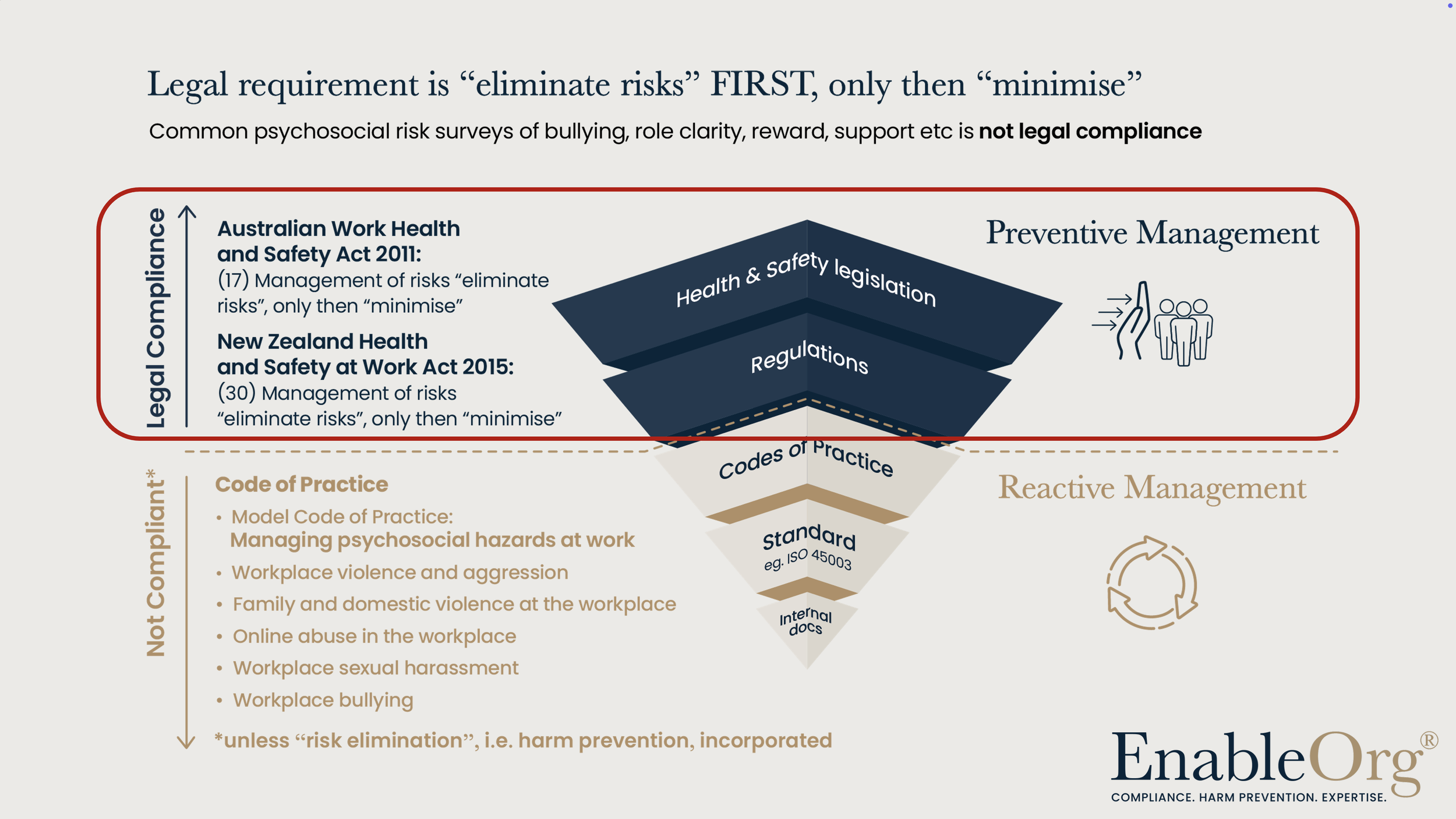

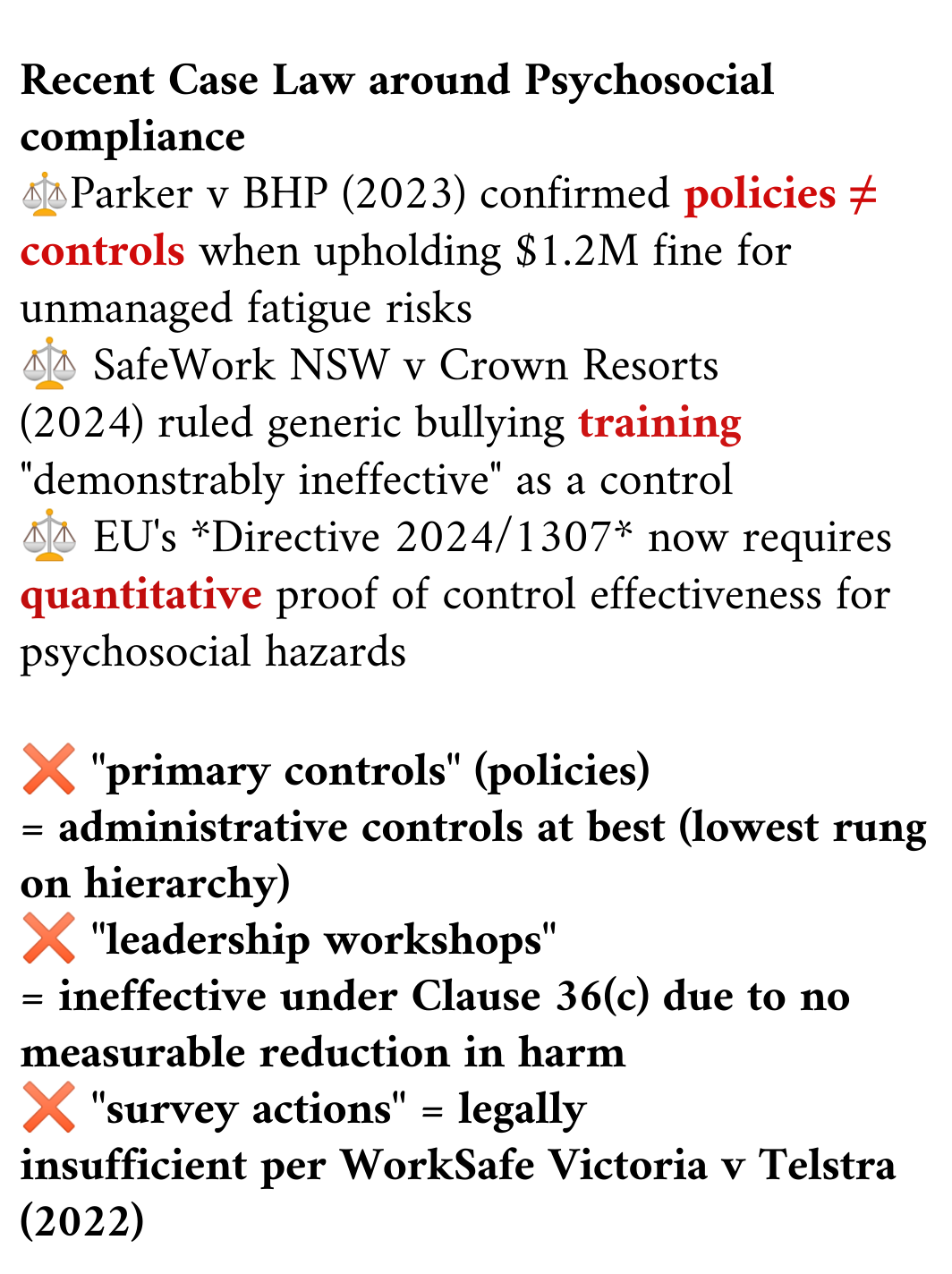
The most common challenge in psychosocial risk management compliance is relying solely on traditional organisational psychology, HR, or wellbeing-led approaches. Strategies such as policies, leadership training, CPD, wellbeing programs, and primary/secondary/tertiary interventions are valuable for culture and support, but do not meet WHS requirements for psychosocial risk management. Recent WHS decisions have increasingly emphasised the need for evidence-based risk controls that directly address identified psychosocial hazards.
EnableOrg® is the industry’s only platform combining deep WHS risk and compliance proficiency with organisational psychology expertise. We understand why these approaches are widely used and how they contribute to a healthy workplace—and we help you align them with what WHS psychosocial risk management actually requires.
Our Elevated Proactive Psychosocial Risk Management framework focuses on harm prevention at the source, integrating compliant WHS risk controls with people-focused practices, so you can both support wellbeing and meet your legal obligations.
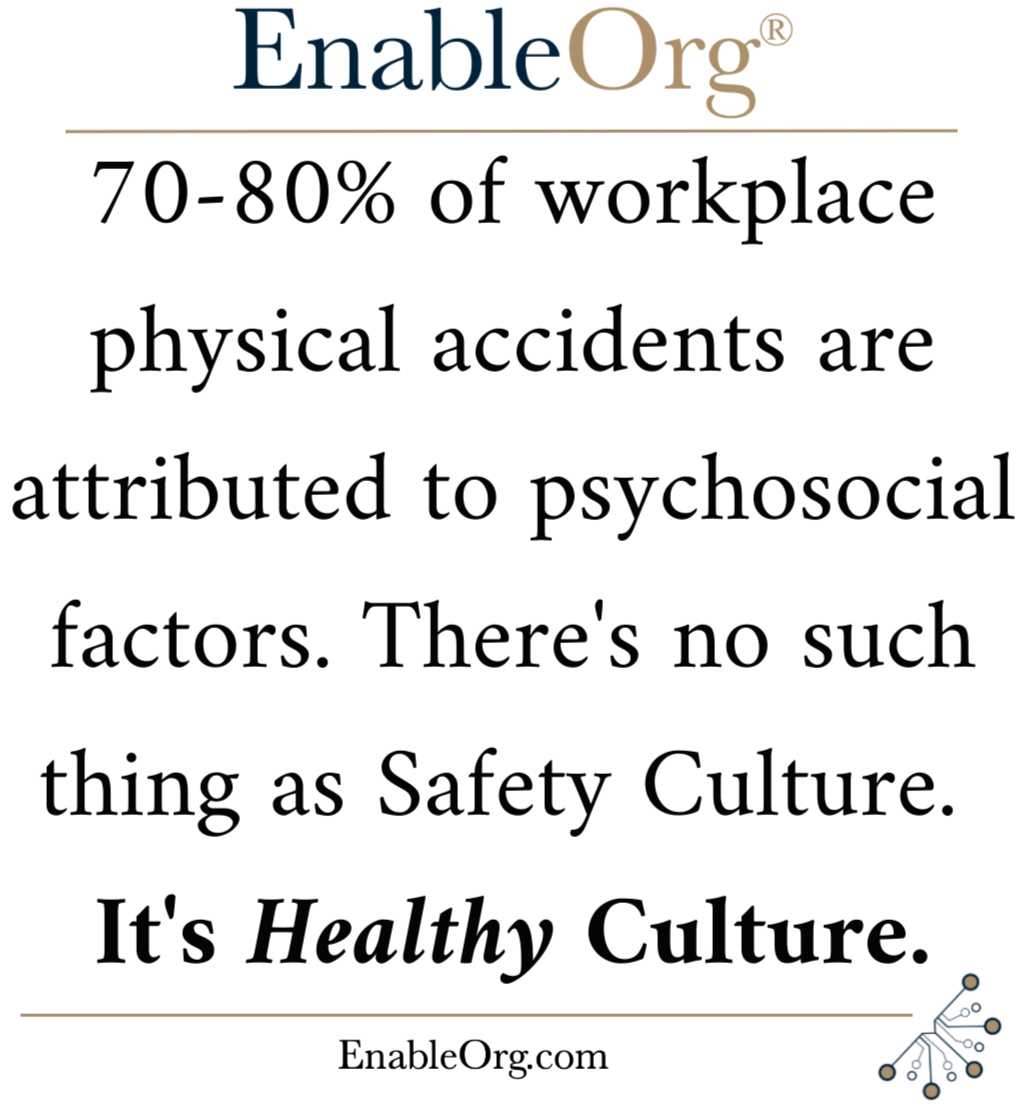
Psychosocial factors often play a predominant role in physical safety incidents. We just traditionally have never been looking there.
💢 70-80% of workplace accidents linked to psychological factors:
Source: American Psychological Association (APA), "Work and Well-being Survey" (2015)
💢 Employees with high levels of stress are 50% more likely to have workplace accidents or injuries:
Source: National Institute for Occupational Safety and Health (NIOSH), "Stress and Health" report (2017)
💢 Depression and anxiety increase workplace accident risk by 30-40%:
Source: World Health Organisation (WHO), "Mental Health and Work" report (2019)
💢 Workers with mental health issues are 3x more likely to be involved in workplace accidents:
Source: Safe Work Australia, "Work-related Mental Health" report (2020)
💢 Fatigue contributes to up to 20% of workplace accidents:
Source: International Labour Organisation (ILO), "Workplace Fatigue" report (2016)
And equally the current thinking that surveying bullying, job demands, role clarity etc amounts to psychosocial risk management is misdirected focus. These are all SYMPTOMS of issues. To reduce the incidents of any of these it is the causes of bullying, job demands, role clarity etc that need to be managed.
💯 if we really want to manage physical and mental safety for long term reduction, it's establishing a Healthy Culture, where employees feel safe and valued that does anything real
Because when we feel safe we pay attention to what we are doing, minimising safety incidents, don't feel the need to bully others, are far more likely to produce quality work, will performance at a much higher level and are less likely to take sick days or leave the organisation. None of this comes from simply measuring your 'safety protocol knowledge', 'incident reporting', 'data collection' etc (ie 'Safety Culture')

EnableOrg’s Psychosocial Risk Compliance with Core Wellbeing software analysis RelianSys® conducted has been invaluable. The data output has enabled us to see that while things were broadly ‘ok’ there were some areas that needed to be strengthened. The specific clarity on areas EnableOrg’s software and diagnostic tool has greatly assisted us to develop an improved framework into our systems and employee supports with elevated safety and performance.
CEO, RelianSys®, Australia